Why Cotton Underwear Makes Sense for Men's Health
Most men never think about what their underwear is made from. What the research says about heat, fit, skin and microplastics, and why a breathable cotton fabric is a sensible choice for something you wear every day.
By Gattrell Brown · 26 June 2026
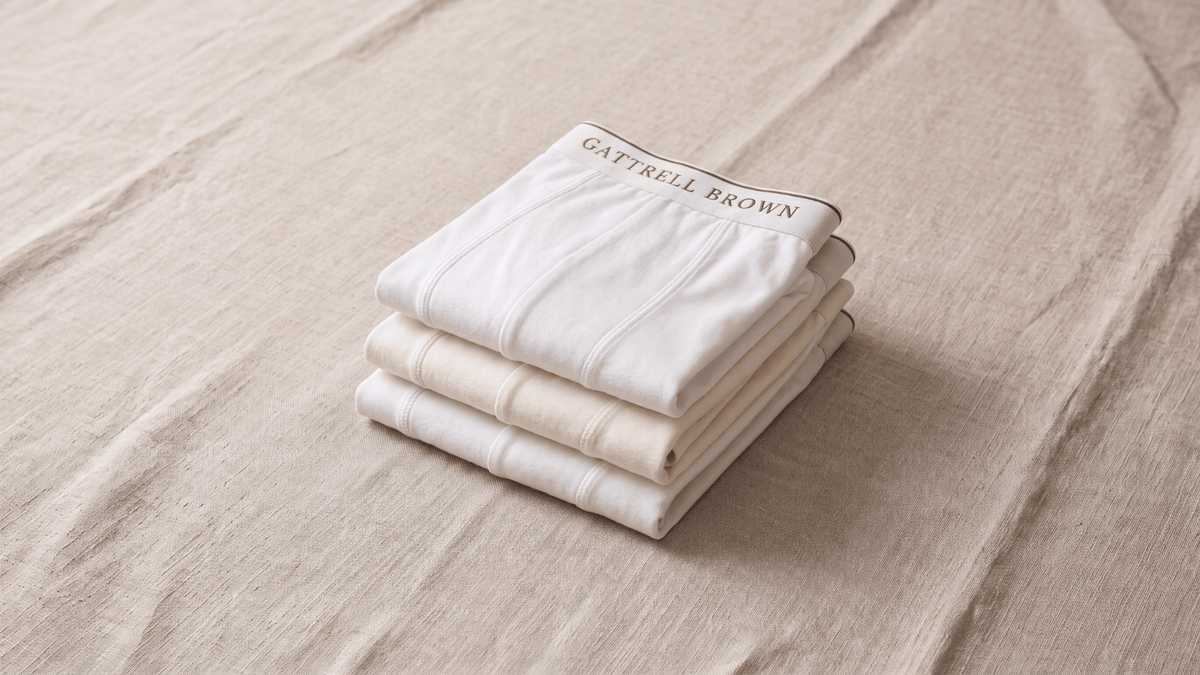
When was the last time you thought about what your underwear is actually made from? For most men the answer is never. You grab a multipack, throw them in the wash and get on with your life. It is one of those purchases that barely registers. But it probably should, because what you wear closest to your body every day can make a difference to how comfortable you are, and there is some interesting research behind it.
What Is Actually in Your Underwear
Walk into any high street retailer and pick up a pack of men's boxers. Turn them over and read the label. Chances are you will find a blend of polyester, nylon, elastane and maybe a percentage of cotton thrown in to make the fabric feel more legitimate. These are synthetic materials, derived from petroleum, manufactured using a range of industrial chemicals and designed primarily to be cheap to produce and easy to care for. They are not designed with your health in mind.
100% cotton underwear is different. Cotton is a natural fibre that has been used in clothing for thousands of years. It breathes, it absorbs moisture, it sits softly against the skin and it does not require the same chemical processing that synthetic fabrics do. The difference sounds simple because it is.
Cotton and Male Fertility
Scrotal temperature plays a critical role in male reproductive health. The testes sit outside the body for a reason. Sperm production requires a temperature slightly lower than core body temperature, typically around 34 to 35 degrees Celsius. When scrotal temperature stays raised for long periods, even by a small amount, sperm count and quality can be affected.
A study published in Human Reproduction in 2018 examined the underwear choices of 656 men attending a fertility clinic. Men who mostly wore boxers had, on average, a 25% higher sperm concentration and a 17% higher total sperm count than men who wore tighter styles. The study looked at how underwear fits rather than what it is made of, but it supports a simple idea: keeping things cooler matters.
Synthetic fabrics tend to hold heat and moisture more than cotton does, and a tight fit holds everything closer to the body. For men who are thinking about fertility, or simply about long term reproductive health, a loose fit in a breathable fabric is the sensible choice.
Hormones and Endocrine Disruption
Beyond fertility, there is a growing body of research into the relationship between synthetic chemicals and male hormone levels. Some synthetic fabrics, prints and finishes have been found to contain chemicals such as phthalates and bisphenol A, more commonly known as BPA. Both are classed as endocrine disruptors, meaning they can interfere with the body's hormone system.
The skin in the scrotal area is particularly permeable, meaning it absorbs some substances more readily than skin elsewhere on the body. Research has linked long-term exposure to endocrine-disrupting chemicals, from many everyday sources, with lower testosterone and poorer sperm quality in men. How much underwear contributes is not known, and no study has measured it directly.
Choosing a natural fibre for the fabric that sits against that skin is a simple, sensible way to cut down on contact with synthetic materials.
Skin Health and Comfort
The health benefits of cotton underwear are not limited to reproductive health. The skin around the groin is sensitive and susceptible to a range of common conditions that are directly influenced by the fabric you wear.
Synthetic fabrics create a warm, moist environment that is ideal for the growth of bacteria and fungi. Conditions like jock itch, caused by a fungal infection called tinea cruris, thrive in exactly these conditions. Cotton absorbs moisture and allows air to circulate, keeping the area drier, which can help reduce the risk of irritation and infection.
Contact dermatitis is another common issue linked to synthetic underwear. The dyes, finishing chemicals and synthetic fibres themselves can trigger allergic reactions and skin irritation, particularly in men with sensitive skin. Cotton is gentle on the skin and rarely causes reactions, which is why it's commonly suggested for people with sensitive skin.
Microplastics and What They Mean for Your Body
Synthetic fabrics shed microplastic fibres, mostly in the wash but also as they are worn. Research from various institutions including the University of Plymouth has found that a single wash of a synthetic garment can release hundreds of thousands of microplastic fibres into the water supply.
What is less well understood, but increasingly being studied, is what happens to the microplastics that do not get washed away. They are present in the air, on surfaces and in contact with the skin. Microplastics have now been detected in human blood, lung tissue and even testicular tissue. A 2023 study published in Science of the Total Environment found microplastic particles in human testicular samples. What that means for health is not yet understood, and researchers are still working on it.
Choosing underwear made from cotton fabric means one less everyday item shedding plastic fibres.
The Simple Case for Cotton
Put together, the case for cotton is a sensible one rather than a miracle. Cotton is more breathable than synthetic fabric, a looser fit helps keep things cooler, it's gentle on sensitive skin, and a cotton fabric doesn't shed plastic fibres in the wash. No pair of underwear will transform your health on its own, but for something you wear against your skin every day, it's an easy choice to get right.
Most men will spend decades never thinking about this. The ones who do make the switch tend not to go back. Once you know what most underwear is made of, the choice becomes straightforward.
It's worth knowing what you're wearing.