What Your Underwear Is Made Of: A Plain Guide to Fabric
Polyester, nylon, elastane, modal and cotton: what each fibre is, how it behaves against the skin and in the wash, and how to read the label on a pair of underwear.
By Gattrell Brown · 10 October 2026
Most of us buy underwear by size and colour and never look at the label. Turn a pair over and you'll usually find a short list of fibres with percentages next to them. That list says a lot about how the pair will feel, how it will wear and what happens to it in the wash. Here is a plain guide to what you're likely to find, and why we only use one of them.
Polyester
Polyester is the most widely produced fibre in the world. According to Textile Exchange, it made up 59% of all fibre produced in 2024. It is made from oil-based plastic, melted and drawn out into long filaments. It is cheap, strong, dries quickly and holds its colour well, which is why it turns up in so much clothing.
What it doesn't do well is deal with moisture. Textile scientists measure how much water a fibre takes up from the air, a figure called moisture regain. For polyester it is well under 1%. Rather than absorbing sweat, it leaves it sitting on the skin, and it tends to hold on to warmth and odour.
Nylon
Nylon, sometimes listed as polyamide, is another oil-based plastic fibre. It is smooth, strong and slightly stretchy, and is often used in "performance" or "sports" underwear. It handles moisture a little better than polyester, but it is still a plastic fibre, and like polyester it sheds tiny plastic fibres when it is washed.
Elastane
Elastane, also known as spandex or by the brand name Lycra, is what gives most underwear its stretch. It is usually only a small percentage of the blend, often around 5%, but it is a synthetic fibre too, and its presence is the reason a pair labelled "mostly cotton" isn't cotton all the way through. Blends are also much harder to recycle, because the fibres can't easily be separated.
Modal and viscose
Modal and viscose sit somewhere in between. They are made from wood pulp, so they start from a natural material, but they are produced through an industrial chemical process that turns the pulp into a new fibre. They feel very soft and smooth, and are often blended with elastane. They are not plastic, but they aren't a simple natural fibre either.
Cotton
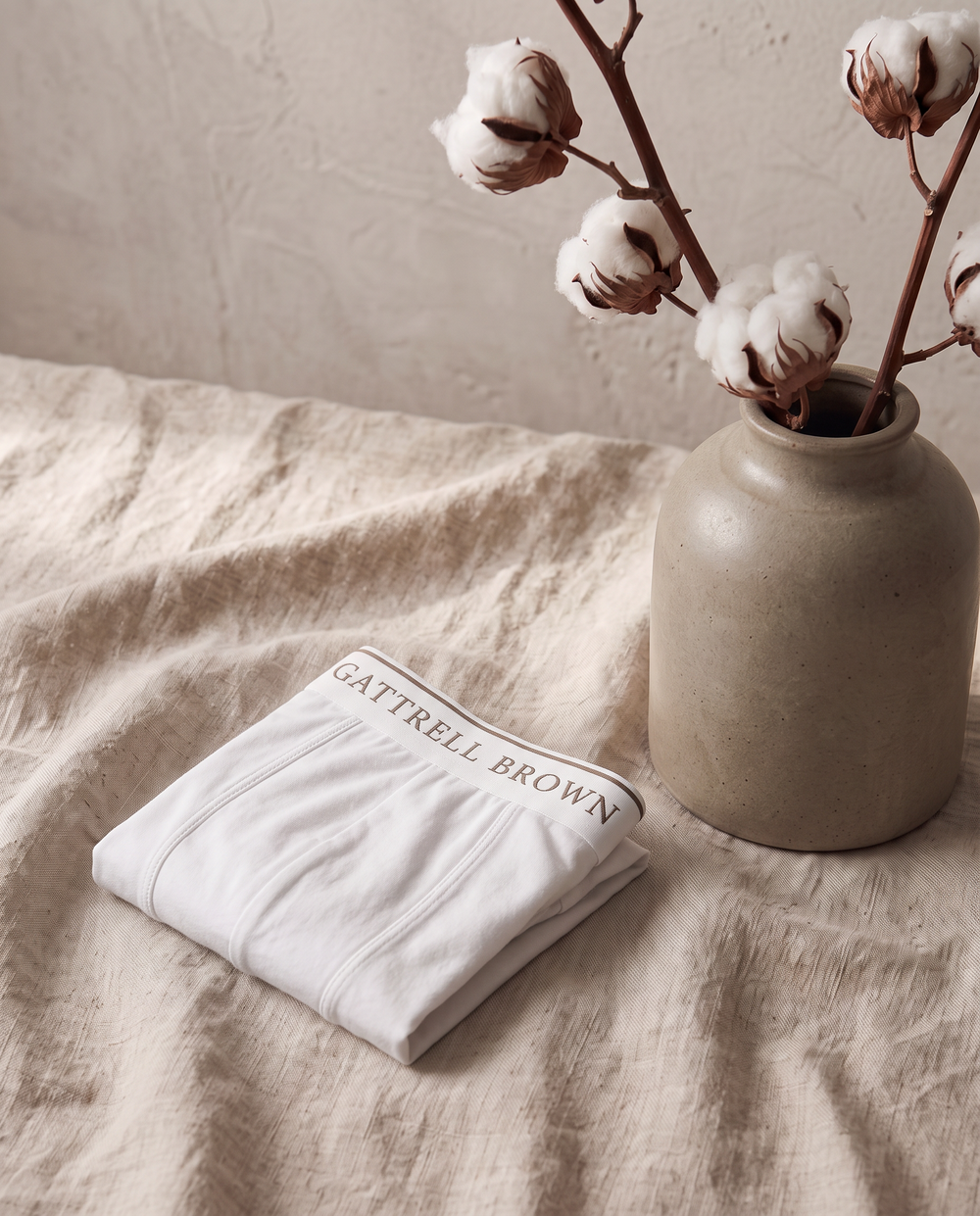
Cotton is the fibre that grows around the seeds of the cotton plant, picked, cleaned and spun into yarn. It has been made into clothing for thousands of years. Its moisture regain is around 8%, many times that of polyester, which means it takes up moisture from the skin and lets it evaporate rather than trapping it. It is breathable, soft against the skin and gets softer the more it is washed.
It has trade-offs, and it's worth being honest about them. Pure cotton has less stretch than a blend, so it relies on a good cut rather than elastic to fit well. It takes longer to dry, and it can shrink a little if it is washed or tumble dried too hot. In return you get a fabric that feels like cotton, because it is.
Knits and weaves
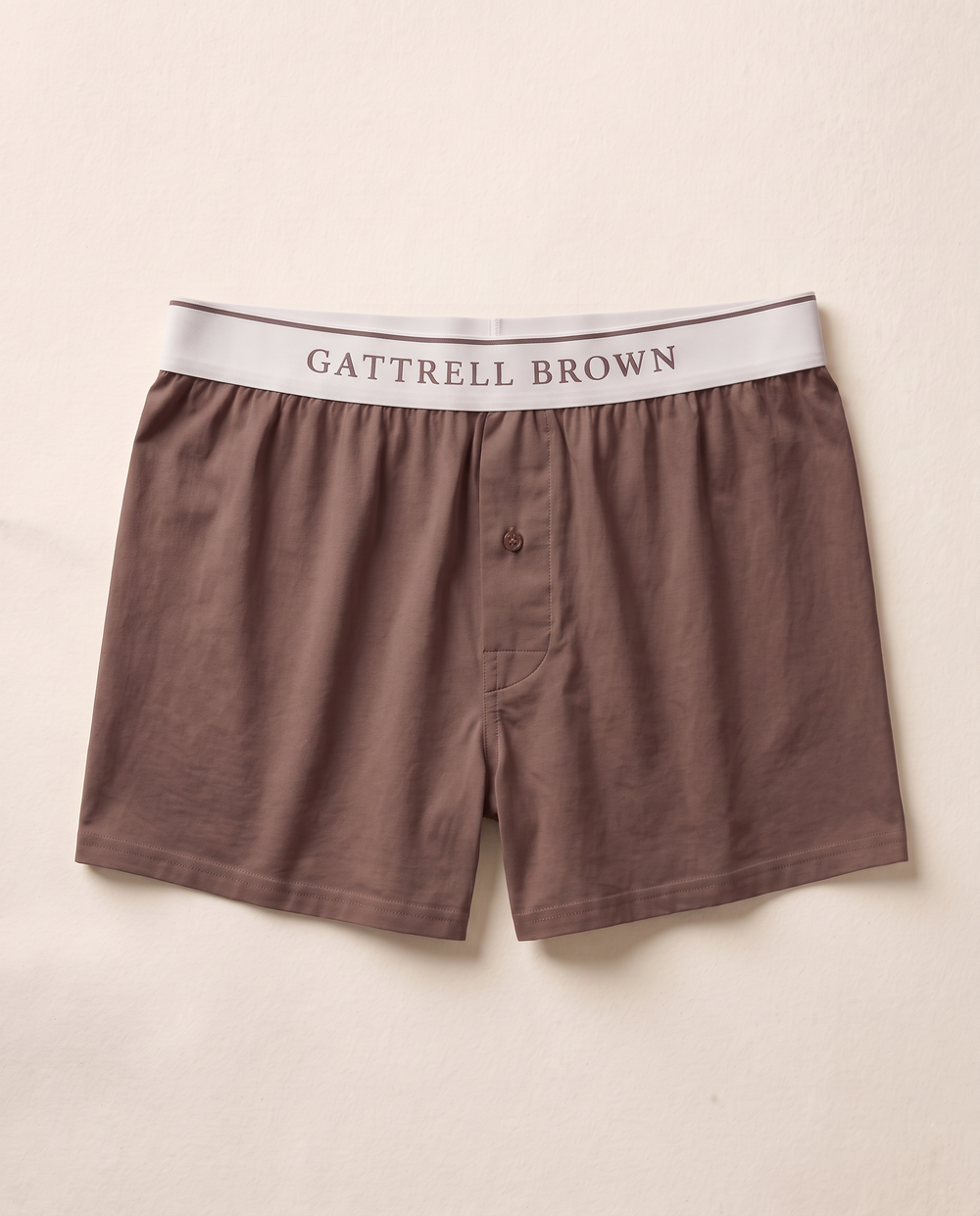
Fibre is only half the story. The same cotton can be made into very different fabrics. Jersey is a knitted fabric, the same family as a T-shirt, with a little natural give that makes it comfortable for close-fitting underwear. Woven cotton, such as poplin, is crisper and has no stretch at all, which is why it is used for traditional loose boxer shorts.
How to read a label
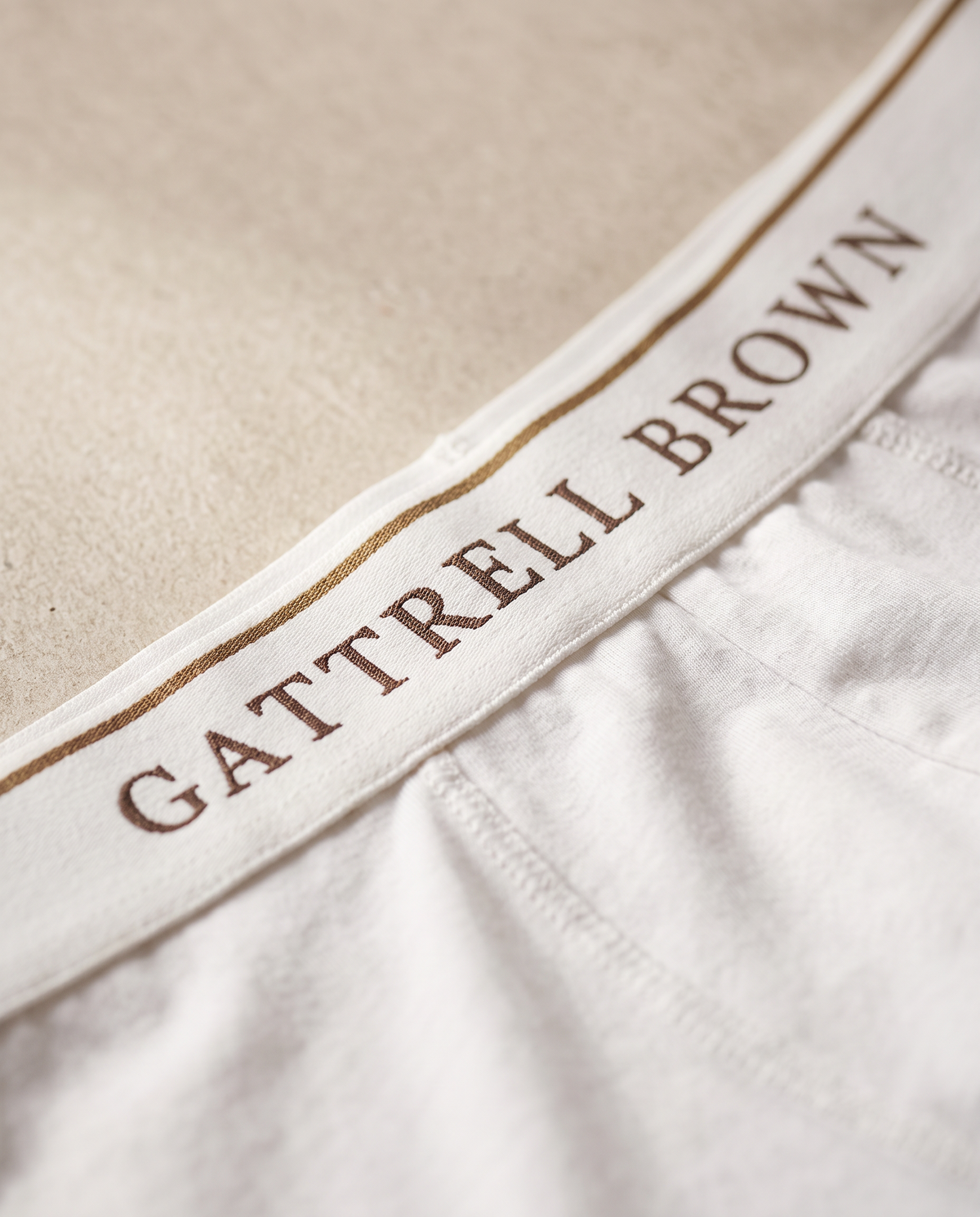
A few things to look out for. "Cotton rich" usually means just over half cotton, with the rest made up of synthetics. "Cotton feel" or "cotton touch" often means no cotton at all. And a blend listed as 95% cotton and 5% elastane is still a synthetic blend, however small the second number is. If you want underwear without plastic in the fabric, look for 100% cotton. It's also worth knowing that labelling rules don't count an elastic waistband, so a pair labelled 100% cotton can still have a little elastane at the waist. Ours does, and we'd rather tell you than leave you to find out.
Why we only use cotton
We started Gattrell Brown because we couldn't find decent underwear that wasn't made with plastic. Every pair we make is cut from 100% cotton, with no polyester, nylon or elastane blended into the fabric. The only stretch is a little elastane in the waistband, which keeps them up and sits at your waist, away from the most sensitive skin. We cut for a clean fit rather than relying on stretch, and we'd suggest washing at 30 to 40°C and drying on a line where you can, so it lasts and keeps its shape.
Sources: Textile Exchange, Materials Market Report 2025. Moisture regain figures are standard textile reference values for cotton, polyester, nylon and elastane.